
Building a marketing engine from zero for a deep tech company
A tech company had a product that a niche community of developers found and adopted, but the enterprise buyers and the wider market did not know it existed. The gap was that the buyers who mattered could not see what the developers already valued. I built the company’s marketing function from zero and became its de facto CMO, owning strategy, execution and budget. It ended in new markets opened and signed enterprise customers.
I built the marketing function for a deep tech company from zero
When I joined, the company had advanced technology, a small and passionate engineering team, and no marketing function of any kind. The developers who were already searching for a solution like it could find it through GitHub. Enterprise and B2B buyers, however, did not know the company existed, and neither did the wider base of people who could have used the product. The technology was ahead of its industry. The traction it had built was invisible to the people who could turn it into revenue.
The starting point
The company had a strong product and almost no means of making it visible to the wider market. There was a website, but no website analytics, no content strategy, no SEO, no developer community programme and no marketing automation. Marketing amounted to a few social accounts and a single, sporadic newsletter, each with a modest following.
What I built
Strategy and positioning. I designed the company’s first marketing strategy, splitting messaging for two audiences: a developer community that evaluates on technical merit and benchmarks, and a C-suite and procurement audience that evaluates on risk, compliance and business outcomes. That split shaped every channel, every piece of content and every PR angle that followed.
Content and systems. I organised the full content operation:
- A monthly reporting cadence
- A redesigned website with localised versions for Japan and China
- 40+ technical videos in 2023 alone, with SEO-optimised titles, descriptions and playlists
- Three webinar series across the company’s core verticals
- A podcast (launched on iTunes, Spotify and Deezer) featuring the CEO and technical leads
- A comic book, merchandise and a brand identity system
- Marketing automation, trained and handed over to the team
Go to market and demand. I owned the company’s demand engine and made a deliberate strategic pivot partway through. The first phase relied on paid advertising to build initial awareness, and once I had enough data to justify the change, I made the decision to cut paid spend and move the budget into organic and SEO. Within six months, organic search grew from a minor channel into the company’s primary source of website traffic. That traffic was smaller in raw volume but higher in quality, reaching developers and decision-makers across the US, Japan, Germany, France and China.
Developer and community marketing. I grew the company’s developer community from a niche community into a large and active following, without any paid acquisition. I built a contributor and ambassador programme that turned the company’s own engineers into visible advocates, and their posts regularly reached a technical audience many times larger than the company page could on its own. The community became a live signal of product adoption and a direct channel to the enterprise evaluators who were watching it.
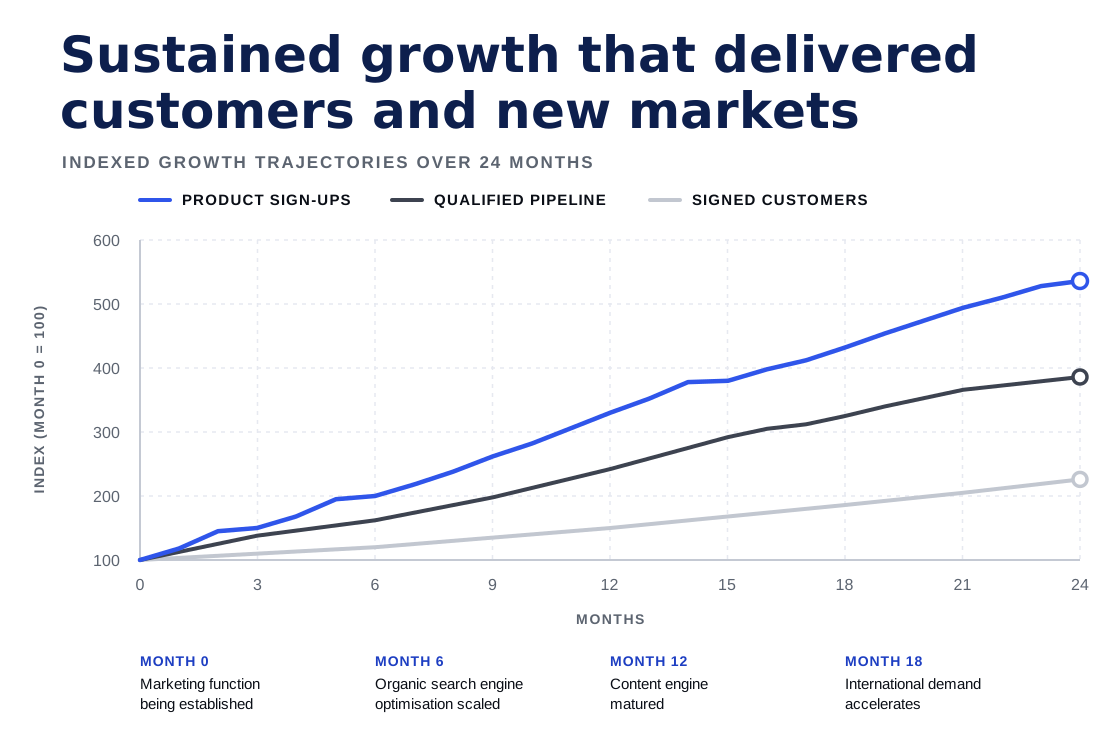
PR and expert authority. I identified, hired and managed three PR agencies across two continents, scaling the operation up when the company needed launch coverage and consolidating back to a single agency once steady-state media relationships were in place. This work took the company from no press presence at all to regular coverage across international trade and technology publications. More importantly, I built a founder-authority engine that took the company’s CEO to a recognised voice in the industry, invited to speak at major conferences and quoted in the publications its buyers read. The purpose was to make an expert visible to the people who needed to find him.
Events and international expansion. I led the company’s presence at the major industry events in its field across Europe and Asia. I opened new geographic markets in Japan and China through localised content and targeted community engagement rather than paid acquisition.
The results
The audience I built from a standing start grew at the following rates:
| Channel | Growth over 24 months |
|---|---|
| LinkedIn following | +443% |
| YouTube subscribers | +582% |
| Developer community | +410% |
| Email subscribers | +173% |
Alongside that audience growth, I moved the company’s website from paid-advertising dependence to majority organic search, and I took its media presence from nothing to regular coverage across international trade and technology publications.
The results that mattered most
- Signed enterprise customers found the company through the channels and content I built.
- New geographic markets opened across the US, Japan, Germany, France and China through organic reach rather than paid spend.
- A flagship product launch, the company’s 1.0 release, was executed across PR, community, events and content with measurable adoption impact.
- An expert-authority engine turned the company’s technical leadership and engineers into recognised industry voices, generating conference invitations, analyst briefings and inbound press interest.
The marketing function I built did not manufacture hype. It made advanced technology visible to the people who needed it.
What this means for your company
If you are a technical founder with a product that is ahead of its marketing, a fractional CMO engagement starts by building the function itself, rather than a campaign or a rebrand. That means the strategy, the systems, the channels, the measurement, the agency and media relationships, and the positioning that separates developer adoption from enterprise sales.
I have done this before. I do it now for a small number of deep tech companies at a time. See Marketing Consulting for what an engagement looks like, and how to handle marketing as a technical founder for the system behind it.
Start with a free Tailored Perspective
Tell me what you are building. I will send you a Tailored Perspective: a specific read of one marketing gap I can see in your company, and how I would fix it. It is free, useful whether or not we ever work together, and its only job is to start a real conversation.
Get my take on your marketing